
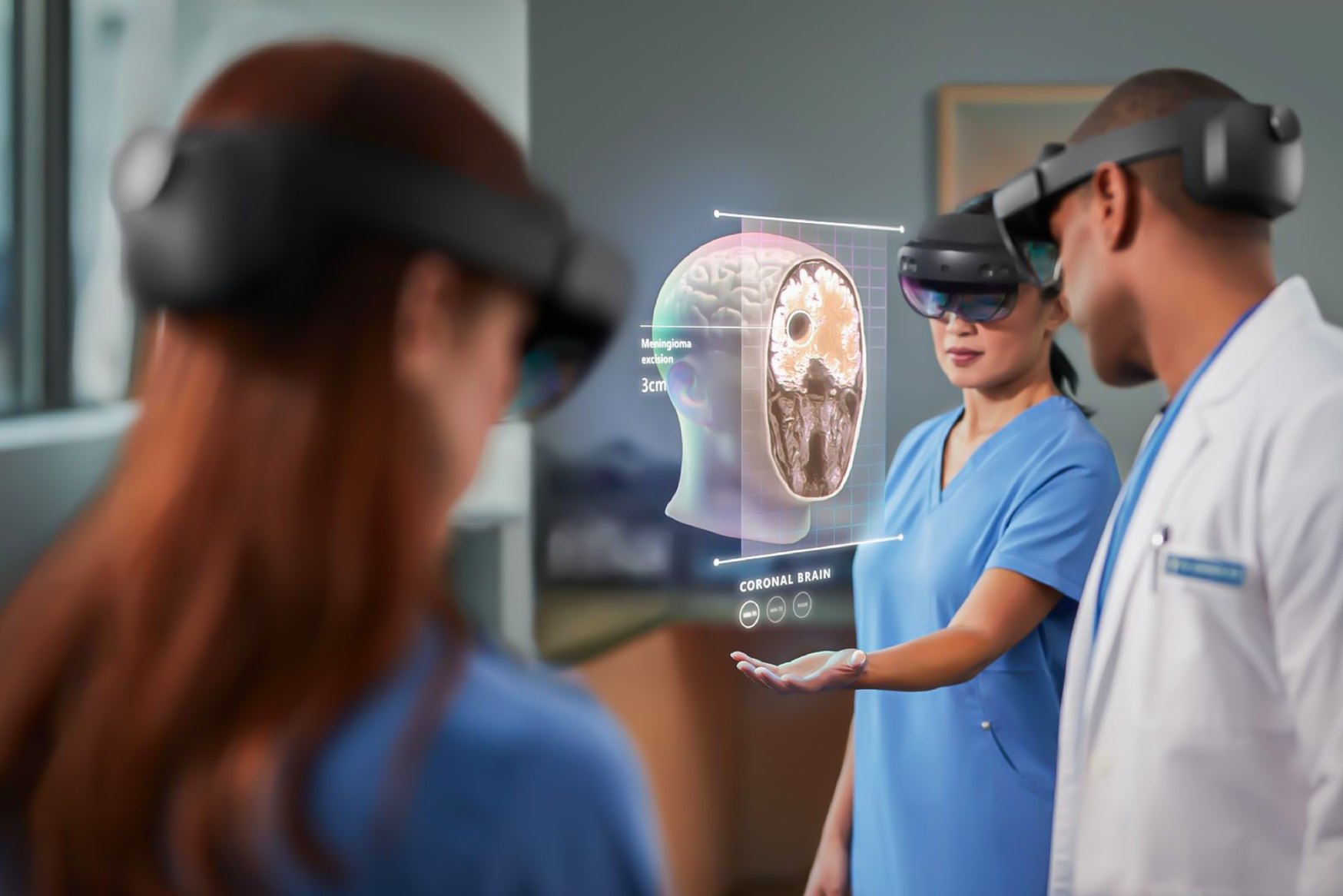
AR in Healthcare: From Surgical Navigation to Patient Education
 By Prince Matthews
6 min read
08 Oct 2025
Augmented Reality (AR) is making profound impacts on the healthcare industry, enhancing various facets of medical practice, from surgical navigation to patient education. By overlaying digital information onto the real world, AR technology is improving accuracy, training, and patient engagement in ways previously unimaginable.
One of the most revolutionary applications of AR in healthcare is its use in surgical navigation. Surgeons can utilize AR to superimpose digital images, such as CT scans or MRI results, directly onto the patient’s body during procedures. This real-time visualization allows for more precise navigation through complex anatomical structures, improving the accuracy of surgeries. For example, AR can assist in avoiding critical blood vessels or organs, minimizing complications and enhancing surgical outcomes.
AR is also transforming medical training and education. By using AR simulations, medical professionals and students can interact with 3D models of anatomical structures, practice surgical techniques, and gain hands-on experience in a controlled, virtual environment. This immersive approach helps in developing practical skills and understanding complex medical concepts more effectively than traditional methods.
In patient education, AR offers significant benefits by providing clear, interactive explanations of medical conditions and procedures. Patients can use AR apps to view 3D models of their anatomy, understand their diagnosis, and visualize treatment options. This enhanced understanding helps patients make informed decisions about their care and improves overall satisfaction with their treatment.
AR also plays a role in remote consultations and telemedicine. By leveraging AR technology, healthcare professionals can collaborate in real-time, providing remote guidance and assistance. For instance, a specialist can offer virtual support to a local physician or consult with patients from afar, improving accessibility and efficiency in healthcare delivery.
Despite these advancements, the integration of AR in healthcare does present challenges. The development and deployment of AR technology require significant investment and expertise. Additionally, ensuring the accuracy and safety of AR applications is crucial to maintaining patient trust and clinical effectiveness. Privacy and data security concerns must also be addressed, particularly when handling sensitive medical information.
In conclusion, AR is significantly enhancing the healthcare industry by improving surgical precision, medical training, patient education, and remote consultations. As AR technology continues to evolve, its impact on healthcare is expected to grow, offering new opportunities for enhancing medical practice and patient care.

The AR Breakthrough That Will Make Blockchain Transactions Simpler Than Ever!
7 min read | 11 Oct 2025
How AI Is Making Blockchain Smarter and Safer – The Inside Scoop!
7 min read | 10 Oct 2025
The Big Tech Twist: How VR Is Set to Disrupt Blockchain Like Never Before!
6 min read | 09 Oct 2025
Unlocking the Power of AR: How Augmented Reality Is Set to Revolutionize Blockchain!
6 min read | 08 Oct 2025More Articles

NFTs: Beyond Digital Art - The Tokenization Revolution
7 min read | 29 Aug 2025

The Metaverse Beckons: How Blockchain Will Shape Virtual Worlds
5 min read | 28 Aug 2025

The Rise of Web3: Decentralized Internet on the Blockchain
4 min read | 27 Aug 2025

Blockchain and the Future of Jobs: How Automation Will Reshape the Workforce
4 min read | 26 Aug 2025
More Articles

The Role of Tech in Financial Inclusion: Reaching the Unbanked
4 min read | 23 Jun 2025

Artificial Intelligence in Sports: Enhancing Performance and Fan Engagement
6 min read | 22 Jun 2025

The Intersection of Technology and Fashion: Wearable Tech Trends
4 min read | 21 Jun 2025

Smart Contracts: Transforming Legal Agreements with Blockchain
5 min read | 20 Jun 2025